My first day at BPS2026 began at the Macromolecular Machines and Assemblies Symposium, learning about structure-function studies through Dr. Bostjan Kobe’s and Dr. Doreen Matthies’ talks. Dr. Kobe highlighted the TIR-domain filamentous structures which facilitate cooperative assembly formation. The talk highlighted a combination of structural-biology techniques to characterize the TIR-domain signalosome. What I found particularly noteworthy was their utilization of nearly five different structural techniques, which allowed for improved resolution and understanding of assembly dynamics. The techniques used were X-ray crystallography, nuclear magnetic resonance (NMR), single-particle cryogenic electron microscopy (cryo-EM), and microcrystal electron diffraction (micro-ED). Next, Dr. Matthies discussed her laboratory’s structure-function study surrounding the magnesium (Mg2+) translocation system, particularly the CorA Mg2+ channel. Interestingly, Mg2+ is the most abundant divalent cation in living cells and Mg2+-deficiency is linked to disorders that affect multiple physiological systems, including the heart, muscles, bones and the immune and nervous system— highlighting the importance of characterizing CorA.
The second day included several interesting platform talks in the Ion Channel Regulation, Pharmacology, and Disease session. Continuing with the theme of structure-function studies, I wanted to highlight Dr. Liang Sun’s talk in particular, which focused on the phosphate export protein, XPR1 receptor. Dr. Sun explored the central question: “How does intercellular phosphate traffic in humans?” Using cryo-EM, mutagenesis and patch-clamp electrophysiology, his group showed that hXPR1 functions as a voltage-gated, phosphate-activated phosphate-permeable ion channel. This work provides a novel perspective on the mechanism of XPR1-mediated phosphate transport. Each of these talks are powerful examples that demonstrate, with curiosity and careful experimentation, proteins reveal their central role(s) through the stories written in their chemistry; we just have to listen.
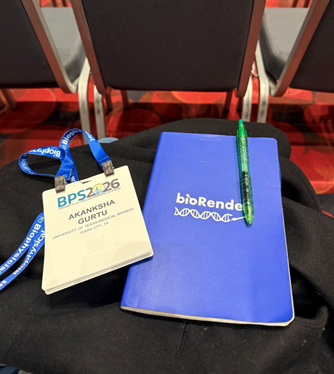
Structure-function studies have been my passion since my first independent research project on nanoparticles at the University of Wisconsin-Green Bay. My research journey began there and continues today with the structural-functional characterization of protein-protein interactions at the University of Texas Medical Branch. To echo what I mentioned above, structural biology is an evolving research approach that provides critical context for understanding the features driving biological function. These talks serve as reminders that structural biology’s great discoveries await those who ask the right questions and truly listen.
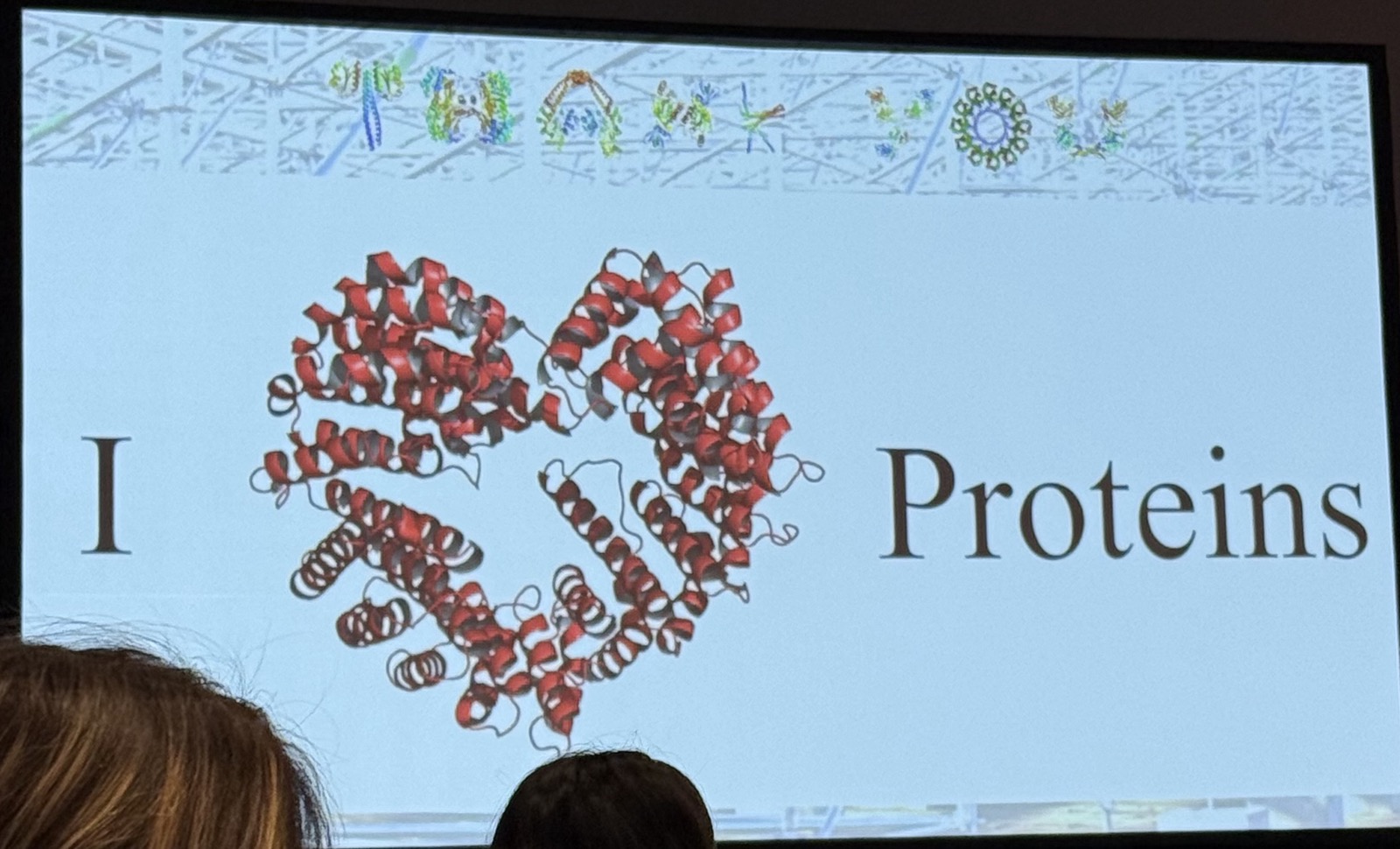
"I <3 Proteins" photo is from Dr. Kobe’s slide from his talk on 02/21/2026.
Today marks the end of the second day of the conference. Below are some key events to look out for tomorrow:
- Graduate student breakfast (7:30AM- 8:30AM)
- New Member Welcome Coffee (10:15AM-11:15AM)
- 2026 Biophysical Society Lecture & Awards (8PM-9:30PM)
- Biophysical Society Reception & Dance (9:30PM onwards)